
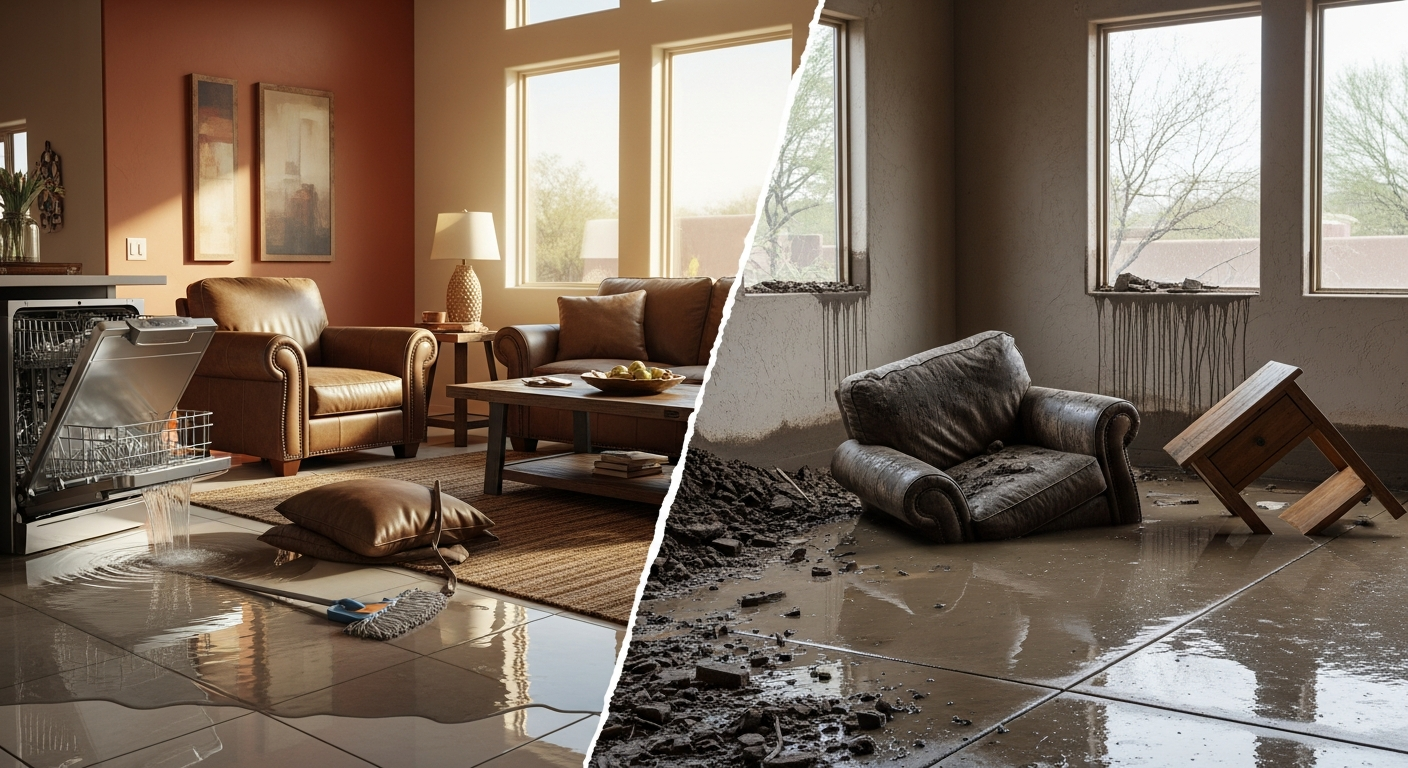
Flood Damage vs Water Damage Explained
Imagine walking into your Tucson home and finding two inches of water covering your living room floor. Panic sets in, and you know you need help fast. But when you call your insurance company or a restoration professional, one of the first questions they might ask is: "Is it flood damage or water damage?"
While the terms are often used interchangeably by homeowners, in the restoration and insurance industries, they mean two very different things. Understanding the distinction between flood vs water damage is crucial. It impacts how the cleanup is handled, the potential health risks involved, and most importantly, whether your standard homeowner's insurance will cover the cost. With Tucson's sudden monsoons and common plumbing issues, knowing the difference can save you time, money, and stress.
What Is Water Damage?
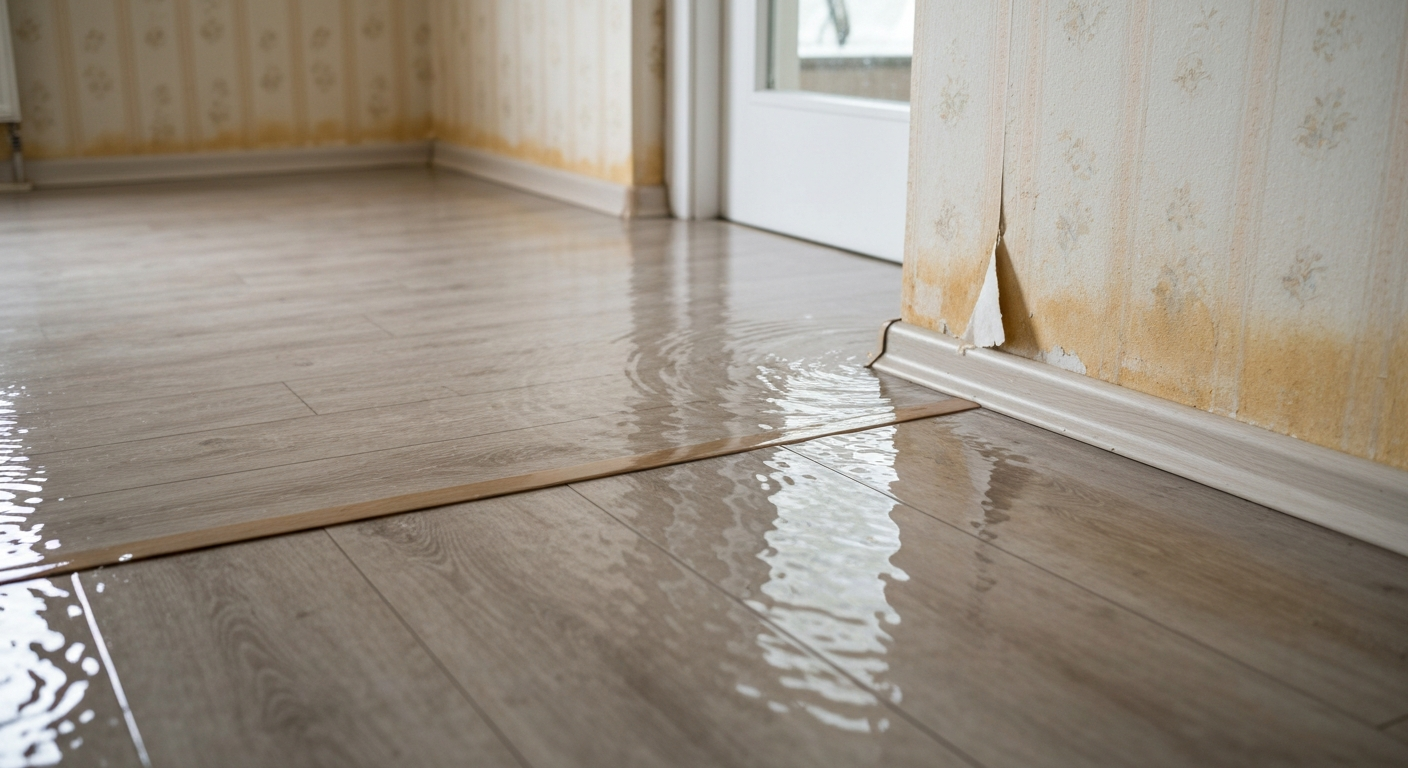
Water damage generally refers to water intrusion that originates from an internal source within the home. It is an issue with the home's plumbing, appliances, or structure that allows water to escape where it shouldn't.
Common examples of water damage include burst pipes, overflowing bathtubs or toilets, leaking water heaters, washing machine hose failures, and roof leaks where rain enters through a damaged section of the roof. Typically, this water starts as "clean water" or "grey water" (water with some contaminants, like from a washing machine), though it can degrade into hazardous "black water" if left standing too long.
What Is Flood Damage?
Flood damage, on the other hand, occurs when water from an external source enters the home. The Federal Emergency Management Agency (FEMA) defines a flood as a general and temporary condition of partial or complete inundation of normally dry land.
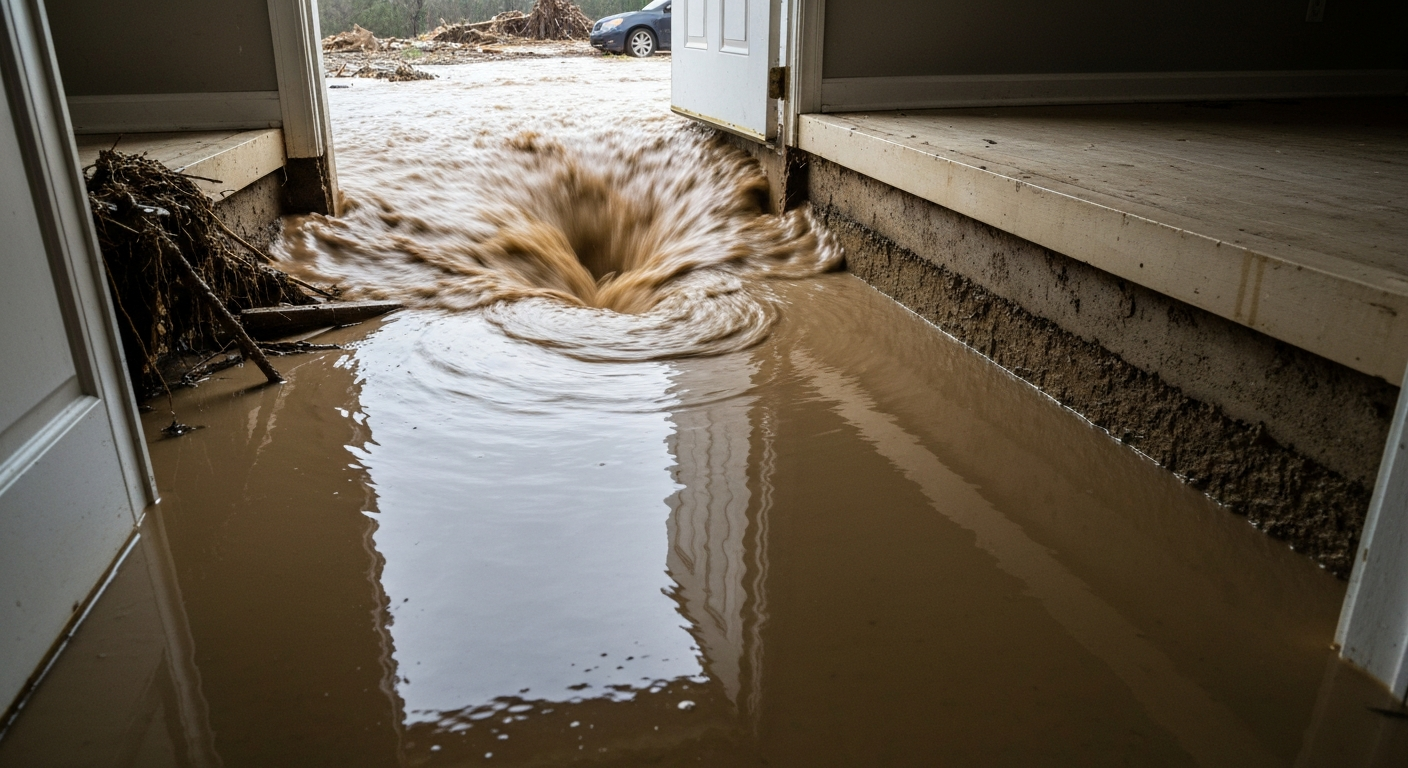
In Southern Arizona, examples of flood damage include monsoon storm runoff, flash floods overflowing from washes, groundwater seeping through the foundation, or muddy water pooling in the yard and entering under doors. Floodwater is almost always classified as "black water" because it travels across the ground, picking up dirt, fertilizers, sewage, and other hazardous contaminants before entering your home.
Key Differences Between Flood Damage and Water Damage
- Source of water: Water damage comes from inside (plumbing/appliances) or top-down (roof leaks). Flood damage comes from outside, rising from the ground up.
- Contamination level: Water damage often starts clean. Floodwater is highly contaminated with soil, bacteria, and debris.
- Insurance coverage: Standard homeowner's policies usually cover sudden internal water damage. They rarely cover flood damage without a separate flood insurance policy.
- Cleanup complexity: Flood damage requires extensive decontamination and often the removal of more building materials due to the hazards present in the water.
- Health risks: Floodwater poses immediate health threats from pathogens, whereas clean water damage primarily poses a risk of mold if not dried quickly.
Unsure What Type of Damage You Have?
If you're unsure whether your property has flood or water damage, a professional inspection can help determine the source and the safest cleanup method.
Call Now for Expert GuidanceWhy the Difference Matters for Homeowners
The distinction between these two types of damage has massive implications for homeowners. First and foremost is insurance. If a pipe bursts, your standard policy will likely cover the mitigation and repairs. If a monsoon flash flood pushes water into your living room, you will need specific flood insurance to cover the loss.
Furthermore, the required cleanup methods differ drastically. Clean water damage might only require extraction and structural drying. Flood damage requires the removal of porous materials (like carpet and drywall) that have touched the contaminated water, followed by rigorous sanitization. The health and safety concerns, as well as the overall cost of restoration, are generally much higher with flood events.
Health Risks Associated with Flood Damage
Treating floodwater like a simple spill is a dangerous mistake. Because it originates outdoors, floodwater carries significant health risks. It can contain bacteria, viruses, and pathogens picked up from the soil or overflowing municipal sewers. Coming into contact with this water can cause infections or gastrointestinal illness. Additionally, the moisture left behind creates the perfect environment for rapid mold growth, which introduces severe respiratory risks within just 24 to 48 hours.
What to Do After Water or Flood Damage
- Stop the source if possible: If it's an internal leak, shut off the main water valve immediately.
- Avoid contact with contaminated water: If the water came from outside, stay out of it. Assume it is hazardous.
- Remove standing water: If it is clean water and safe to do so, begin mopping or using a wet vac.
- Begin drying process: Open windows (if weather permits) or turn on fans to circulate air.
- Call a professional restoration company: Fast action prevents secondary damage like mold and structural rot.
Professional Restoration Process for Both
Whether you are dealing with a burst pipe or monsoon flooding, a professional restoration team follows a systematic approach to save your property:
- Inspection and assessment: Determining the source, category of water, and extent of the damage.
- Water extraction: Using industrial pumps and vacuums to remove bulk water quickly.
- Structural drying: Deploying air movers and dehumidifiers to pull moisture from wood, drywall, and concrete.
- Decontamination: For flood damage, applying antimicrobial treatments to eliminate pathogens and bacteria.
- Restoration and repairs: Rebuilding the affected areas to return your home to its pre-loss condition.
How to Prevent Water and Flood Damage in Tucson
While you can't control the weather, you can prepare your home. To prevent internal water damage, schedule regular plumbing inspections, check appliance hoses annually, and maintain your water heater. To protect against flood damage in areas like Oro Valley, Marana, and Sahuarita, focus on the exterior. Improve your property's drainage so water flows away from the foundation. Keep your roof and gutters well-maintained, and prepare for monsoon season with sandbags if your property is in a low-lying area.
Whether you need Flood Damage Restoration in Tucson or Water Damage Restoration, understanding what you're dealing with is the first step to a successful recovery.
Need Emergency Restoration Help in Tucson?
Available 24/7 for water, fire, mold, and biohazard emergencies.
Request a Free Estimate
Our emergency response team is standing by 24/7. Call us directly or send a request and we'll respond right away.
Quality Restoration
- Available 24/7Serving Southern Arizona since 1982.
- 3401 E 44th St, Tucson, AZ 85713& all surrounding areas.