
How Flash Floods Impact Homes in Southern Arizona
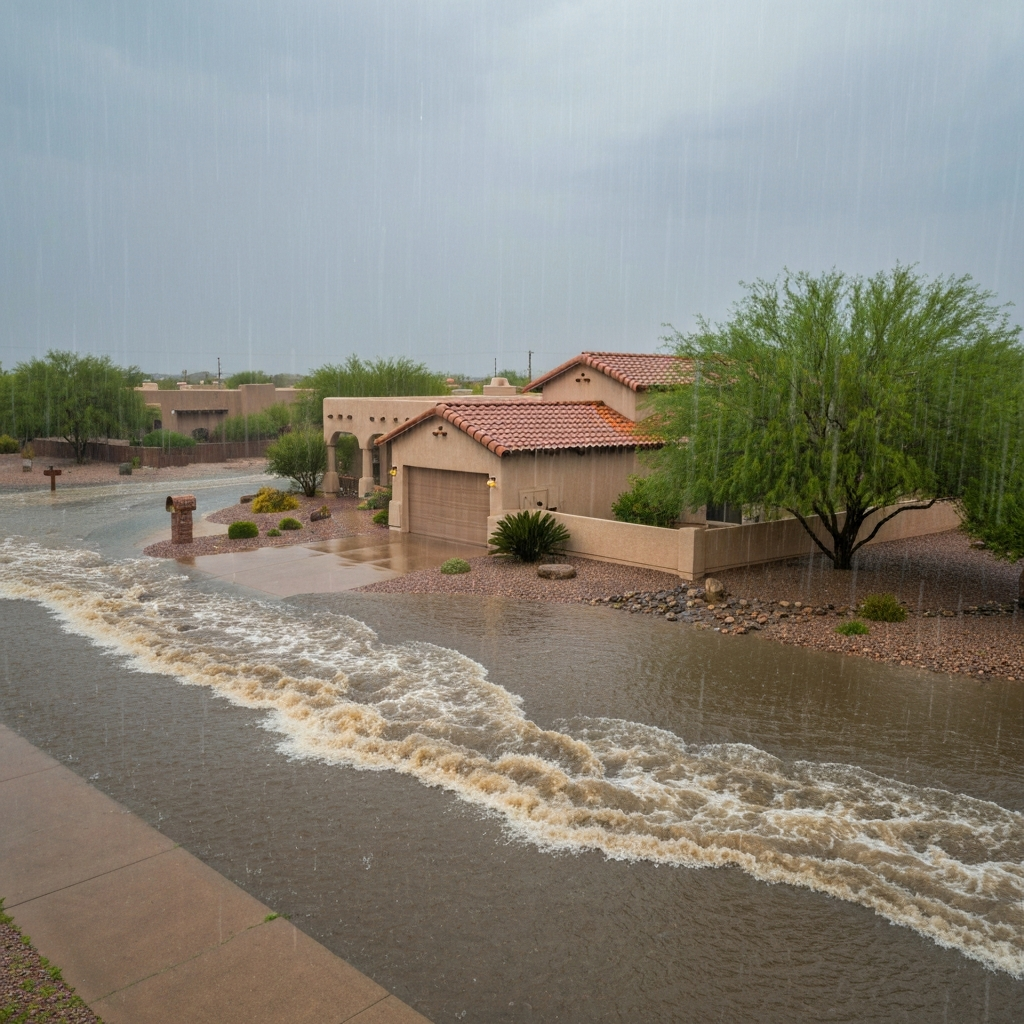
A homeowner in Southern Arizona watches the sky darken as a sudden monsoon storm rolls over the Catalina Mountains. Within minutes, a torrential downpour begins. What seems like a typical summer storm quickly turns dangerous as water rapidly pools in the street, overflows the curb, and rushes toward the front door. Before they can even grab a few towels, muddy water is seeping into the living room.
This scenario plays out far too often. Flash floods develop with terrifying speed, leaving property owners with little to no time to react. The unpredictable rainfall of monsoon season means that flash flood damage in Arizona can occur within minutes, turning a dry desert wash into a raging river and overwhelming residential drainage systems. Understanding how these floods impact homes is the first step in protecting your property and knowing how to respond when disaster strikes.
Why Flash Floods Are Common in Southern Arizona
It might seem contradictory that a desert region experiences such severe flooding, but Southern Arizona’s unique environment creates the perfect conditions for flash floods.
First, the summer monsoon storms bring intense, localized rainfall. A single storm can dump several inches of water in under an hour. Second, the desert soil is incredibly dry, sun-baked, and often packed with caliche—a natural cement-like layer. Instead of soaking into the ground like a sponge, the water hits the hard earth and immediately runs off. This rapid runoff funnels into dry washes, streets, and ultimately, residential neighborhoods. Furthermore, rapid urban development has paved over natural drainage paths, increasing the speed and volume of water flowing through communities like Tucson, Oro Valley, and Marana.
How Flash Floods Enter Homes
Flash flood water is aggressive and will find the path of least resistance into your home. Common entry points include:
- Flowing toward low-lying areas: Homes built at the bottom of hills or near natural washes are incredibly vulnerable to sudden surges of water.
- Poor grading and drainage: If the landscaping slopes toward the foundation rather than away from it, water will naturally pool against the exterior walls.
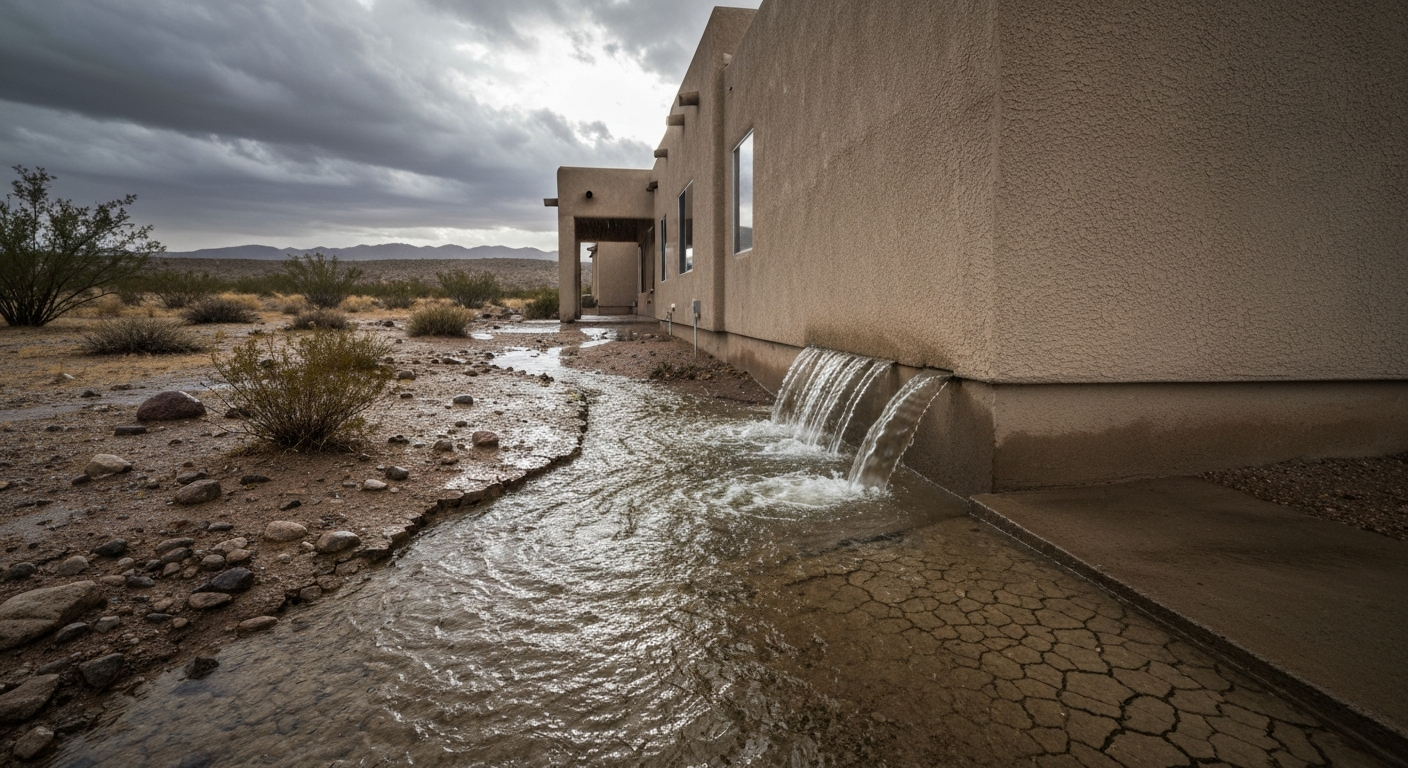
- Foundation cracks: Even hairline cracks in stucco or concrete slabs can allow pressurized water to seep into the home's interior.
- Door and window entry points: Sliding glass doors, poorly sealed entryways, and low-set windows are notorious weak points when water levels rise rapidly.
Types of Damage Caused by Flash Floods
The damage left in the wake of a flash flood goes far beyond wet floors. The sheer force and volume of the water can cause devastating harm to a property:
- Structural damage: Fast-moving water can undermine foundations, warp framing, and weaken load-bearing structures.
- Flooring and drywall damage: Drywall acts like a sponge, wicking water upward and losing its structural integrity. Carpets, hardwood, and laminate flooring are often ruined within hours of exposure.
- Contamination from debris and runoff: Floodwater deposits thick layers of mud, silt, and desert debris inside the home, embedding itself into every crevice.
- Damage to personal belongings: Furniture, electronics, sentimental items, and important documents are frequently destroyed by the sudden influx of water and mud.
Flash floods can cause serious damage in minutes.
If your home has been flooded, don't wait for the water to recede. Call now for immediate cleanup and restoration.
Get Emergency Help NowContamination Risks from Flash Flood Water
One of the most critical things homeowners must understand is that flash flood water is not clean rainwater. In the restoration industry, it is classified as "Category 3" or "black water."
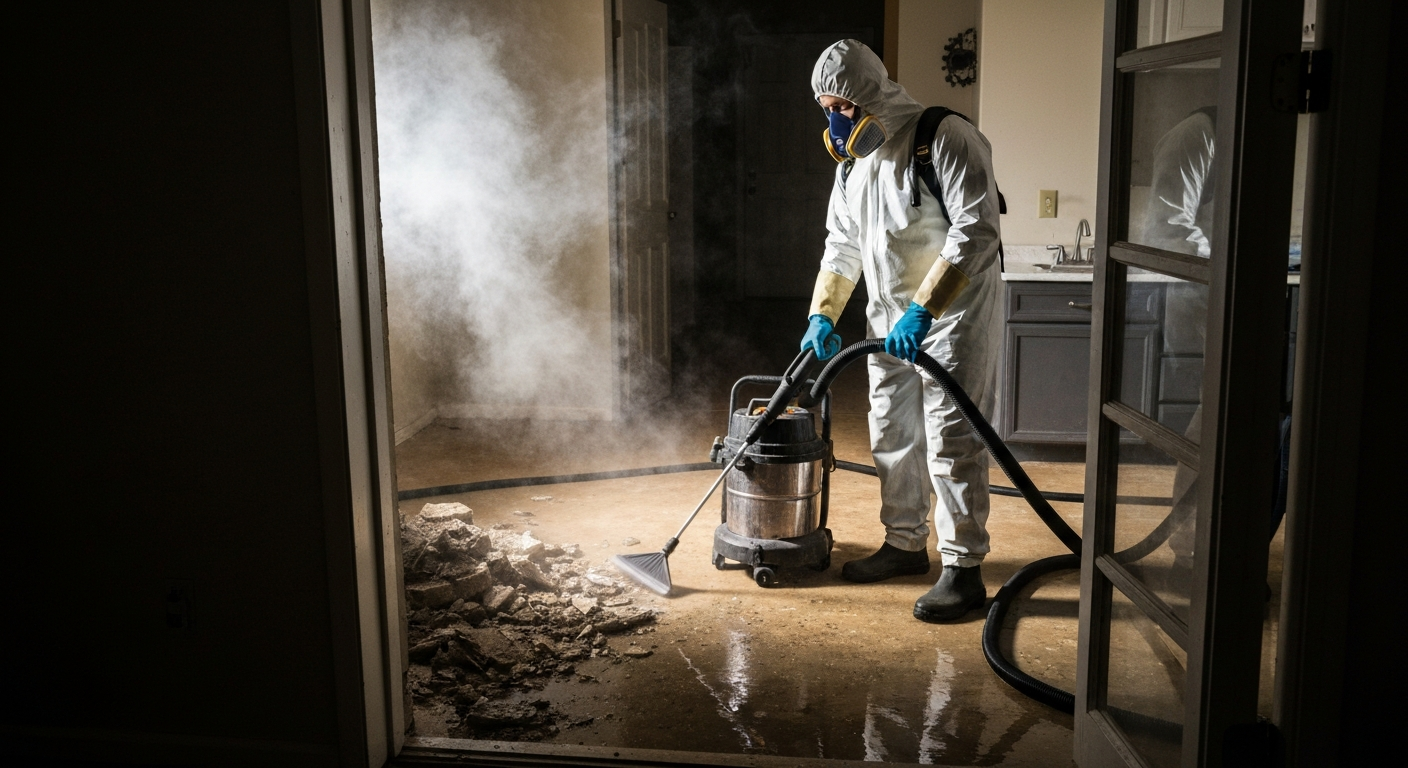
As the water rushes through streets and yards, it picks up a toxic mix of pollutants. This often includes motor oil, pesticides, fertilizers, animal waste, and even raw sewage if municipal systems overflow. Because of these severe contamination risks, coming into contact with floodwater poses significant health hazards, including bacterial infections, gastrointestinal illnesses, and severe skin irritation. This is why professional Biohazard Cleanup Tucson protocols are often required alongside standard water extraction.
How Flash Flood Damage Spreads Quickly
The initial surge of water is just the beginning. Flash flood damage spreads rapidly through a home due to the porous nature of building materials.
Water moves quickly across flat surfaces and immediately begins absorbing into drywall, insulation, and baseboards. As the water wicks upward, it carries contaminants deep into the walls where they are incredibly difficult to remove. If the moisture is not extracted and the structure thoroughly dried within 24 to 48 hours, aggressive mold growth will begin. In the warm Southern Arizona climate, mold spores thrive, turning a water issue into a severe indoor air quality crisis.
What to Do After a Flash Flood
If your home is impacted by a flash flood, taking the right steps immediately can protect your safety and limit further damage:
- Ensure safety first: Make sure all family members and pets are safe and out of the flooded area.
- Avoid contact with contaminated water: Do not wade through the water without heavy-duty protective boots and gloves.
- Shut off electricity if safe: Turn off the main breaker to prevent electrocution, but never touch the electrical panel if you are standing in water.
- Document damage: Take photos and videos of the standing water and damaged items for your insurance claim before any cleanup begins.
- Call a professional restoration company: Immediate extraction and decontamination by a certified Flood Damage Restoration Tucson team is essential to save your property.
How to Prepare Your Home for Monsoon Season
While you cannot control the weather, you can take proactive steps to defend your home before the monsoon storms arrive in Sahuarita, Vail, and the greater Tucson area:
- Improve drainage around your property: Ensure that landscaping grades slope away from the foundation and consider installing French drains or swales.
- Seal foundation cracks: Inspect your home's exterior and patch any cracks in the stucco or concrete slab.
- Maintain roofing systems: Keep flat roof scuppers and traditional gutters clear of leaves and desert debris so water can flow freely.
- Clear debris from drainage paths: Ensure that neighborhood washes or yard channels are free of obstructions that could cause water to back up into your yard.
- Have sandbags ready: If you live in a high-risk flood zone, keep sandbags on hand to block vulnerable doorways when heavy rain is forecasted.
Flash flooding is a serious threat in Southern Arizona, but with the right preparation and a trusted restoration partner, you can navigate the monsoon season safely.
Need Emergency Restoration Help in Tucson?
Available 24/7 for water, fire, mold, and biohazard emergencies.
Request a Free Estimate
Our emergency response team is standing by 24/7. Call us directly or send a request and we'll respond right away.
Quality Restoration
- Available 24/7Serving Southern Arizona since 1982.
- 3401 E 44th St, Tucson, AZ 85713& all surrounding areas.