
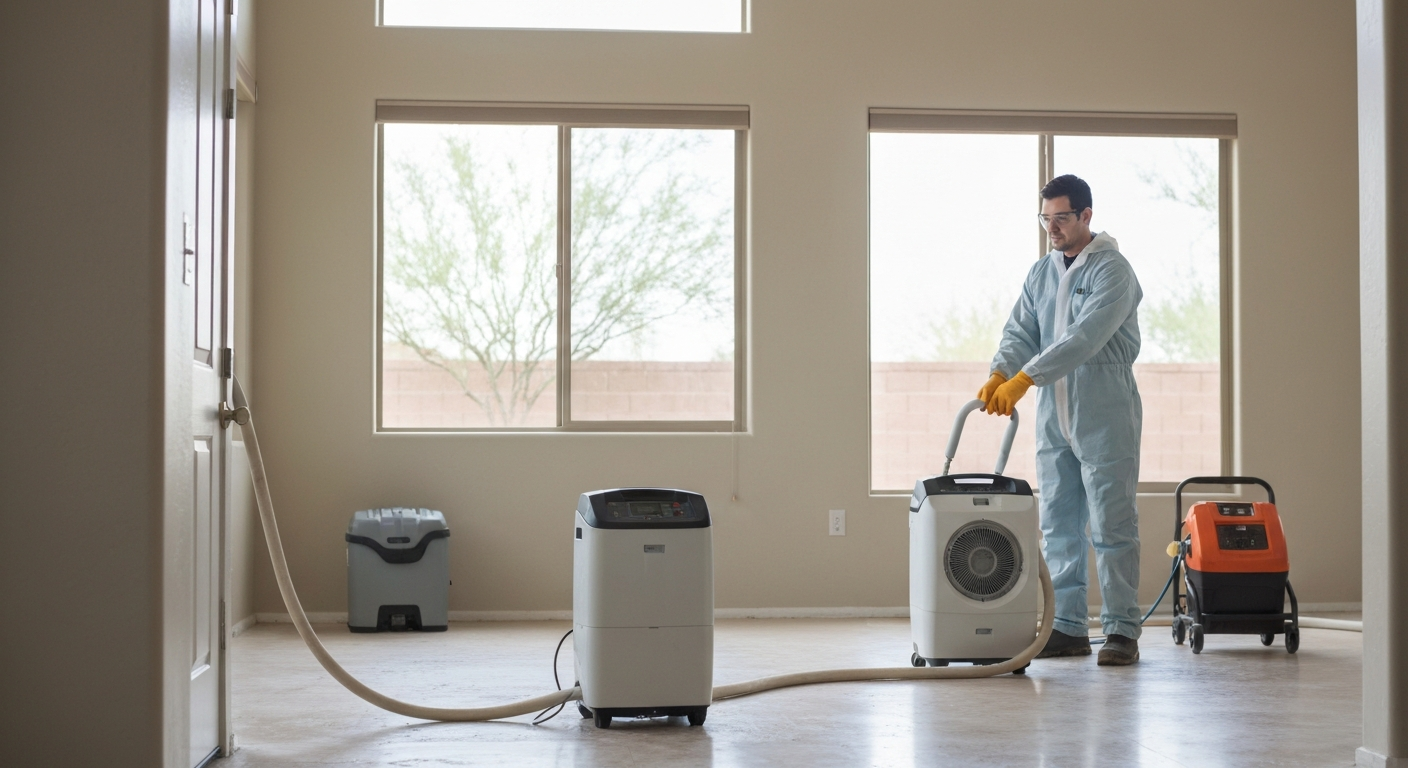
How to Prevent Mold After Water Damage
A homeowner experiences a sudden burst pipe or a heavy monsoon leak. After the initial shock wears off and the standing water is mopped up, a new, more insidious threat looms: preventing mold.
Water damage is stressful enough, but the secondary damage caused by mold can be devastating to both your property and your health. In Tucson, many homeowners mistakenly believe our dry desert climate will naturally dry out a flooded room before mold can take hold. However, indoor environments, especially when air-conditioned, create the perfect conditions for mold to thrive. Acting with absolute urgency is the only way to prevent mold after water damage.
Why Mold Forms After Water Damage
Mold spores are microscopic and exist naturally in the air everywhere—both indoors and outdoors. On their own, they are relatively harmless. However, when these spores land on a damp surface, they begin to multiply.
For mold to form, it requires three things: moisture, an organic food source (like drywall paper, wood framing, or carpet backing), and a warm environment. When your home suffers water damage, you are essentially providing an all-you-can-eat buffet for mold spores. In Southern Arizona, monsoon moisture, hidden slab leaks, and sudden humidity spikes inside a closed home create the ideal breeding ground.
How Quickly Mold Can Develop
The clock starts ticking the moment water touches a porous surface. Mold can begin forming within 24 to 48 hours under the right conditions.
If moisture is not rapidly removed, the growth accelerates exponentially. What starts as a microscopic colony can quickly become a visible, health-threatening infestation. Hidden moisture—water that has seeped under flooring or behind baseboards—dramatically increases this risk because it evaporates much slower than surface water, giving mold ample time to establish deep roots.
Early signs of mold forming on damp drywall. This can happen within 48 hours of initial water exposure.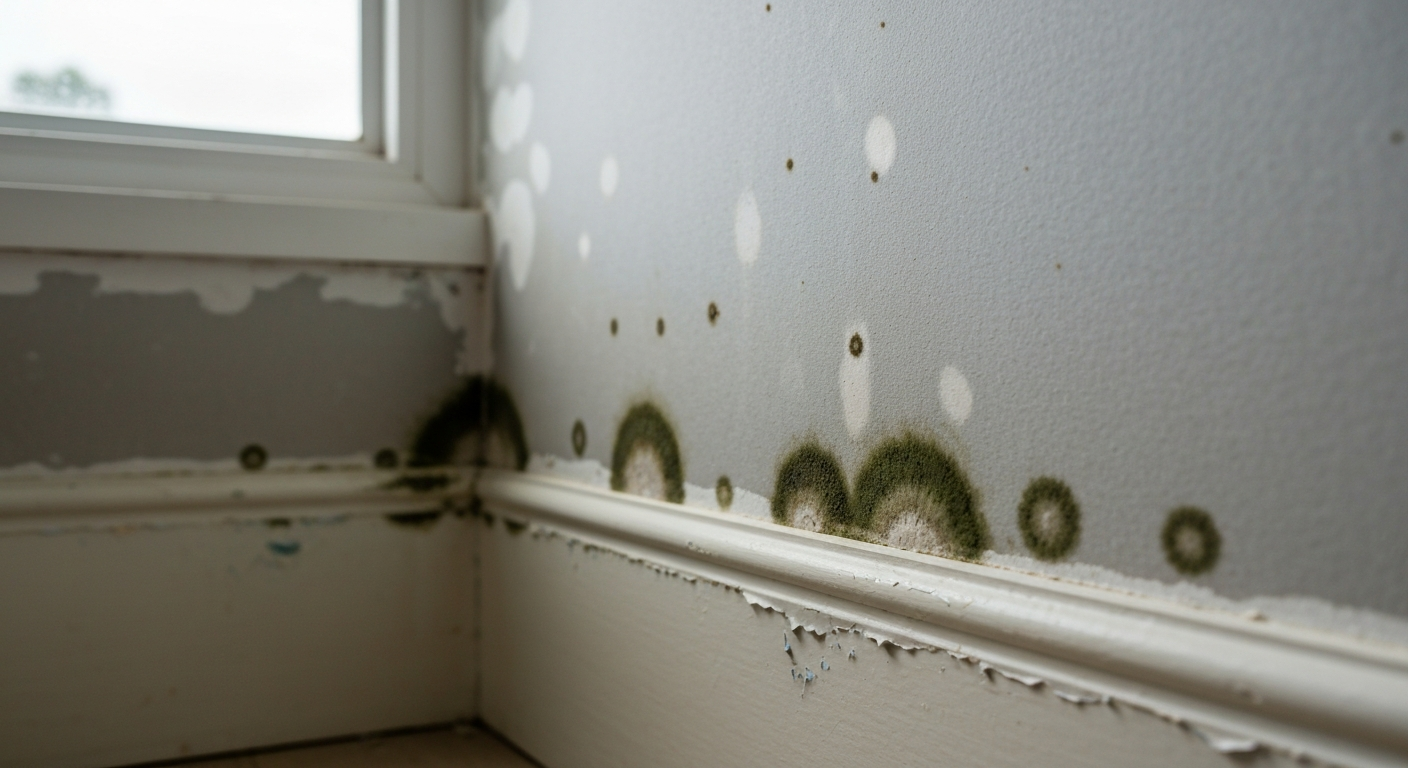
Immediate Steps to Prevent Mold
If you are dealing with a water intrusion, take these immediate steps to stop mold before it starts:
- Remove standing water quickly: Use wet vacs, mops, and towels to extract as much surface water as possible.
- Begin drying affected areas immediately: Do not wait. Get air moving across the wet surfaces right away.
- Increase ventilation: If the outdoor air is dry (not during a monsoon storm), open windows. Otherwise, rely on your HVAC system to circulate air.
- Remove wet materials if necessary: Saturated rugs, soaked cardboard boxes, and heavily damaged carpet padding should be removed from the home.
- Monitor humidity levels: Indoor humidity should be kept below 50% to discourage mold growth.
Importance of Proper Drying Equipment
Many homeowners attempt DIY drying using a few ceiling fans and open windows. Unfortunately, this is rarely enough to prevent mold. Household fans only dry the surface, leaving the core of the drywall and the structural framing soaking wet.
Professional Water Damage Restoration in Tucson relies on commercial-grade air movers and low-grain refrigerant (LGR) dehumidifiers. Air movers force moisture out of the materials and into the air, while the dehumidifiers extract that moisture from the air, physically removing it from the environment. This aggressive, controlled drying process is the only proven way to stop mold in its tracks.
Technicians use advanced moisture meters to detect hidden water that household fans leave behind.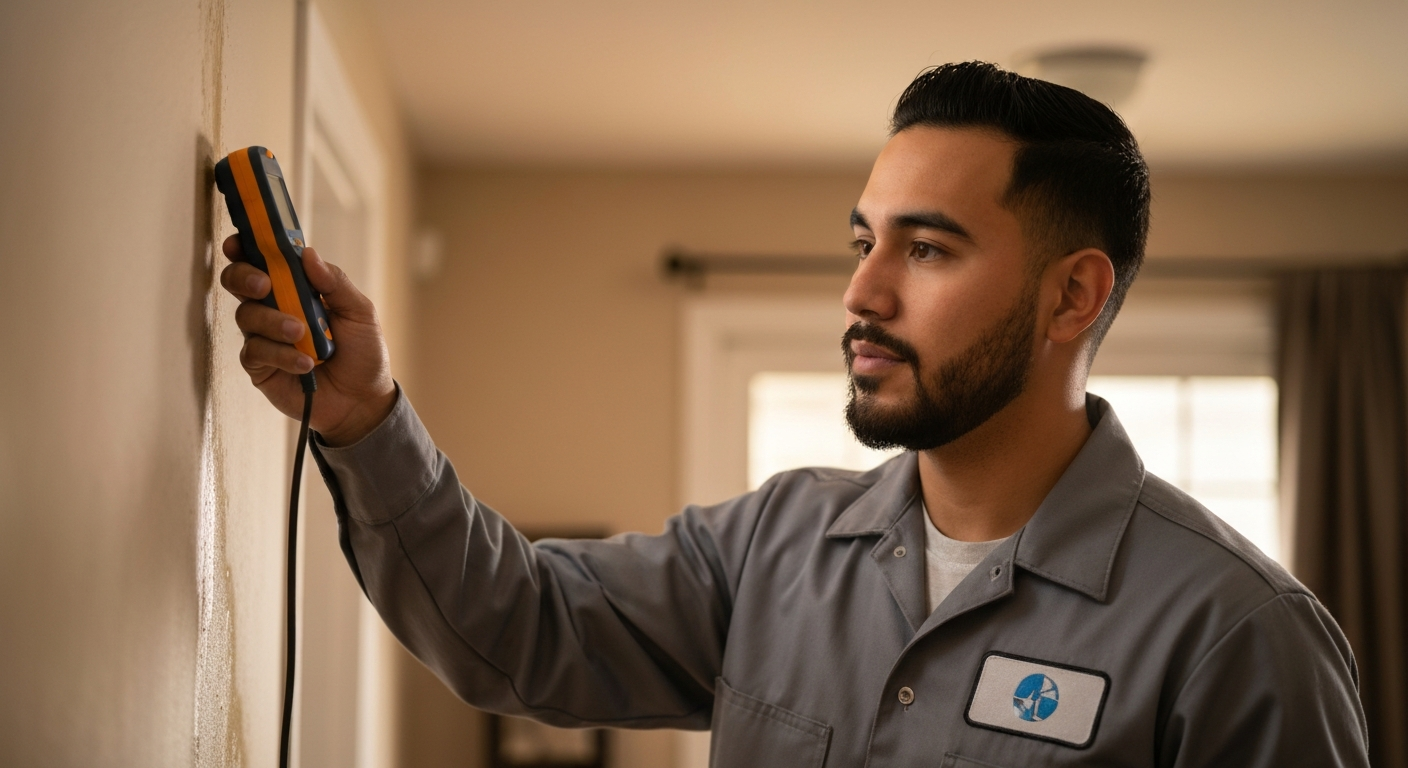
Hidden Moisture Areas to Watch
Water is sneaky. It follows the path of least resistance, often hiding in places you cannot see or easily reach. To truly prevent mold, you must address hidden moisture in these critical areas:
- Behind walls: Water wicks up drywall like a paper towel, soaking the insulation and wooden studs inside the wall cavity.
- Under flooring: Water trapped under laminate, hardwood, or tile can sit for weeks, rotting the subfloor.
- Inside ceilings: Roof leaks or second-floor plumbing failures pool water on top of the ceiling drywall.
- HVAC systems: If water gets into your ductwork, your AC will spread mold spores throughout the entire house.
Need Help Drying Your Home?
If your home has experienced water damage, quick action can prevent mold. Call now for professional drying and inspection.
(520) 322-5326How Professional Water Damage Restoration Prevents Mold
Hiring a professional restoration company is the safest and most effective way to protect your property. Professionals offer:
- Thorough moisture removal: Using advanced extraction tools to pull water from deep within carpets and pads.
- Monitoring and documentation: Daily moisture readings ensure the drying process is progressing correctly and provide proof for insurance claims.
- Preventative antimicrobial treatments: Applying specialized, safe antimicrobial solutions to vulnerable surfaces to inhibit fungal growth during the drying process.
Signs Mold May Already Be Developing
If it has been more than 48 hours since the water damage occurred, you must be vigilant. Watch for these signs that mold is already taking hold:
- Musty odors: A persistent, earthy, or damp smell is usually the first sign of hidden mold.
- Visible discoloration: Look for black, green, or white spotting on walls, baseboards, and ceilings.
- Increased humidity: The room feels unusually sticky or damp.
- Allergy symptoms: Sudden onset of sneezing, coughing, itchy eyes, or respiratory irritation when inside the home.
When to Call a Professional
While a spilled glass of water is a DIY cleanup, significant water intrusion requires expert intervention. You should call a professional if:
- There are large areas of water damage (affecting multiple rooms or soaking the carpet).
- You are dealing with persistent moisture that won't dry after 24 hours.
- You see or smell signs of mold growth.
- You are uncertain if the water has seeped into the walls or under the flooring.
At Quality Restoration, we proudly serve Tucson, Oro Valley, Marana, Sahuarita, and Vail. If you suspect your home hasn't dried properly, our Mold Remediation Tucson experts are ready to help.
{/* Bottom CTA */}Prevent Mold Before It Starts in Your Tucson Home
Mold can begin forming within days. Our Tucson team is ready to dry, inspect, and protect your home from further damage. Act fast to save your property.
Call Now Request ServiceNeed Emergency Restoration Help in Tucson?
Available 24/7 for water, fire, mold, and biohazard emergencies.
Request a Free Estimate
Our emergency response team is standing by 24/7. Call us directly or send a request and we'll respond right away.
Quality Restoration
- Available 24/7Serving Southern Arizona since 1982.
- 3401 E 44th St, Tucson, AZ 85713& all surrounding areas.