
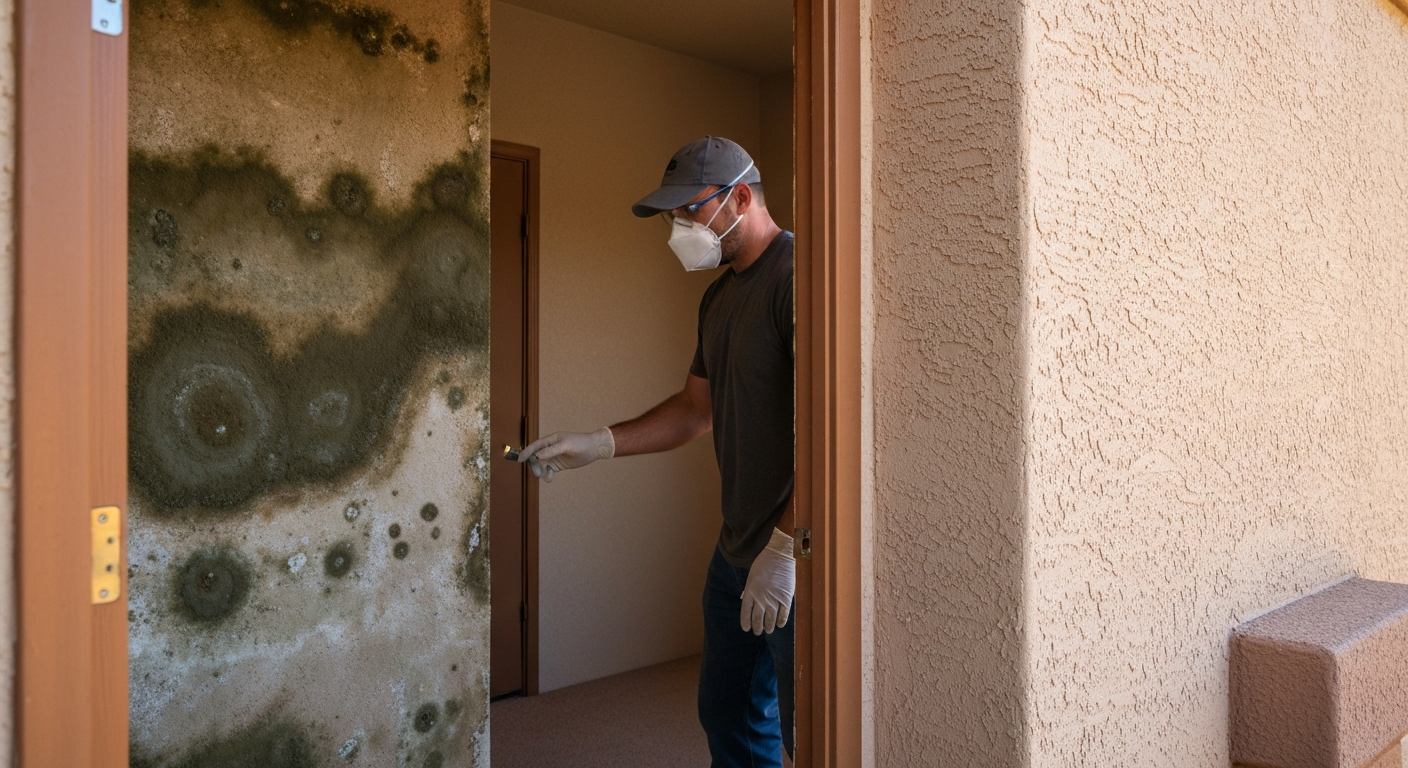
Black Mold vs Regular Mold
If you have discovered mold growing in your Tucson home, your first question is almost always the same: is this dangerous black mold, or just ordinary household mold? It is one of the most common concerns we hear, and the answer matters more for how you respond than for the color you see. This guide breaks down the real differences between black mold and regular mold, why it grows in our desert climate, and when it is time to call a professional.
What Is \"Regular\" Mold?
Mold is a type of fungus that exists naturally almost everywhere, indoors and out. There are thousands of species, and most of what people call \"regular mold\" includes common varieties like Cladosporium, Aspergillus, and Penicillium. These molds appear in a range of colors — green, white, gray, orange, even pink — and typically show up on damp surfaces like bathroom grout, window sills, shower corners, and around leaky plumbing.
Regular mold is rarely a medical emergency, but it is still a problem. It damages the surfaces it grows on, produces a musty odor, and can trigger allergy-like symptoms such as sneezing, congestion, watery eyes, and skin irritation — especially in children, older adults, and anyone with asthma or a weakened immune system.
What Is \"Black Mold\"?
\"Black mold\" usually refers to Stachybotrys chartarum, a dark greenish-black fungus that has earned a fearsome reputation. Unlike many common molds, Stachybotrys thrives on water-damaged, cellulose-rich materials — think drywall, ceiling tiles, cardboard, and wood that has stayed wet for days. It tends to have a distinctive slimy or wet appearance rather than a powdery one.
The concern with black mold is that it can produce mycotoxins. Prolonged exposure has been associated with more serious symptoms in sensitive individuals, including persistent coughing, headaches, fatigue, and respiratory difficulty. It is worth noting that color alone is not a reliable way to identify Stachybotrys — several harmless molds also look black, and only laboratory testing can confirm the species with certainty.
Black Mold vs. Regular Mold: The Key Differences
While professional testing is the only way to be sure, there are a few practical distinctions. Regular mold is often powdery or fuzzy and appears in varied colors on consistently damp surfaces. Black mold is typically dark green to black, has a slimy texture, carries a stronger musty or earthy odor, and almost always indicates a significant, ongoing moisture problem behind or beneath the surface. In short: regular mold is a maintenance issue, while black mold is usually a symptom of hidden water damage.
Why Mold Grows in Tucson Homes
Many people assume our dry desert climate makes mold a non-issue — but Tucson homes face very specific risks. Monsoon flooding, roof leaks, slab leaks under concrete foundations, and the heavy condensation produced by air conditioning running through the long, hot summer all create the trapped, hidden moisture mold needs. Because this moisture often sits inside walls, ductwork, and under flooring, dangerous growth can develop out of sight before you ever notice a musty smell.
When to Call a Professional
Small patches of surface mold — less than about ten square feet on a non-porous surface like tile — can often be cleaned safely by a homeowner with proper protection. However, you should call a certified remediation professional if the affected area is large, if mold keeps returning after cleaning, if it appears on porous materials like drywall, if it follows a flood or plumbing leak, or if anyone in the home is experiencing unexplained respiratory symptoms.
Attempting to scrub away extensive or suspected black mold yourself can actually make things worse by releasing spores into the air and spreading contamination to clean areas. Professionals use containment, negative air pressure, HEPA filtration, and EPA-registered antimicrobials to remove mold safely and verify the air is clean before finishing.
Protect Your Home and Health
Whether you are dealing with ordinary household mold or suspect something more serious, the underlying cause is always the same: excess moisture. Identifying and fixing the water source is the only way to stop mold from coming back. If you are unsure what you are looking at, do not guess — a professional inspection gives you a clear answer and a safe path forward. Our IICRC-certified team has helped Tucson families with mold and water damage since 1982, and we are available 24/7 to assess your property and restore it safely.
Need Emergency Restoration Help in Tucson?
Available 24/7 for water, fire, mold, and biohazard emergencies.
Request a Free Estimate
Our emergency response team is standing by 24/7. Call us directly or send a request and we'll respond right away.
Quality Restoration
- Available 24/7Serving Southern Arizona since 1982.
- 3401 E 44th St, Tucson, AZ 85713& all surrounding areas.